Admission Requirements
-
Completed application
-
Official transcripts
-
Letter of recommendation
-
Official SAT and/or ACT test scores (Marywood is test optional)
-
Essay (optional)
Facilities & Technology
The Center for Natural and Health Sciences (CNHS) is equipped with seven large teaching laboratories.
-
laboratory space for teaching labs, equipped with ductless fume green hoods
-
an environmental wet laboratory/greenhouse
-
five dedicated research laboratories
-
state-of-the-art anatomy and physiology laboratory houses virtual dissection Anatomage table
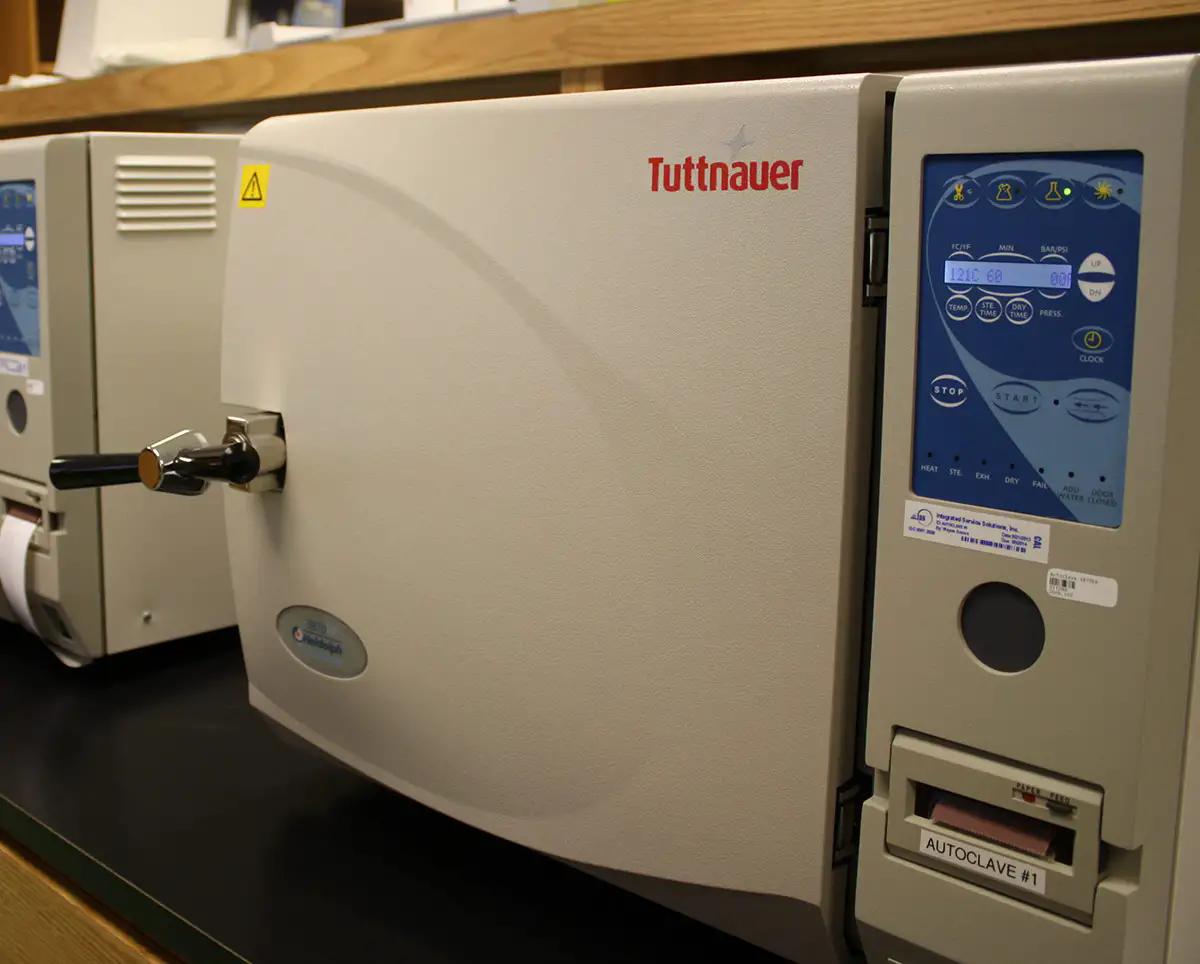
Autoclaves Autoclaves are pressure chambers that sterilize equipment, perform scientific experiments, or carry out industrial processes using high pressure steam.
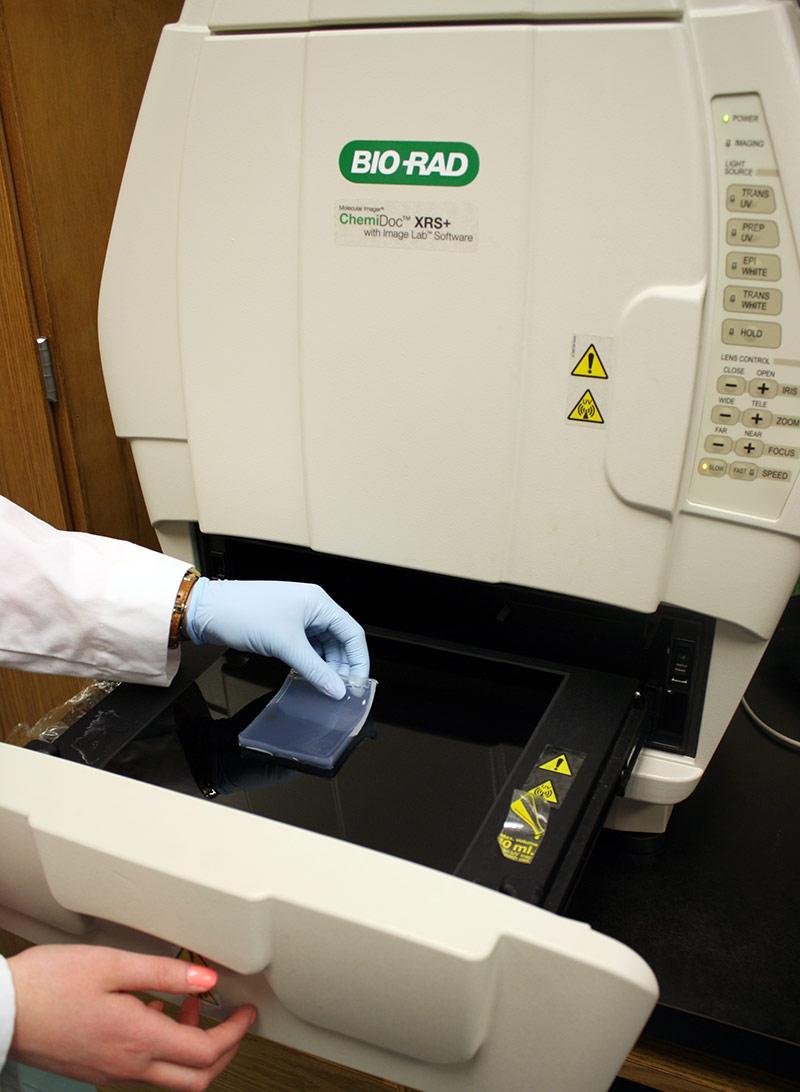
Gel & Blot Imaging System The ChemiDoc XRS+ System features high-sensitivity detection for a wide range of methods including fluorescence and densitometry.
The ChemiDoc XRS+ system is based on CCD high-resolution, high-sensitivity detection technology and modular options to accommodate a wide range of samples and support multiple detection methods including fluorescence, colorimetry, densitometry, chemiluminescence, and chemifluorescence. The system is controlled by Image Lab™ software to optimize imager performance for fast, integrated, and automated image capture and analysis of various samples.
The system accommodates a wide array of samples, from large handcast polyacrylamide gels to small ReadyAgarose™ gels and various blots. The system is an ideal accompaniment to PCR, purification, and electrophoresis systems, enabling image analysis and documentation of restriction digests, amplified nucleic acids, genetic fingerprinting, RFLPs, and protein purification and characterization.
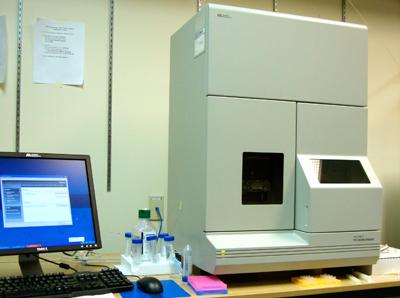
Genetic Analyzer DNA Sequencing machine

Incubator Shakers Innova 42 stackable incubated shakers provide broad temperature capabilities for culturing a wide variety of organisms in flasks up to 3 L
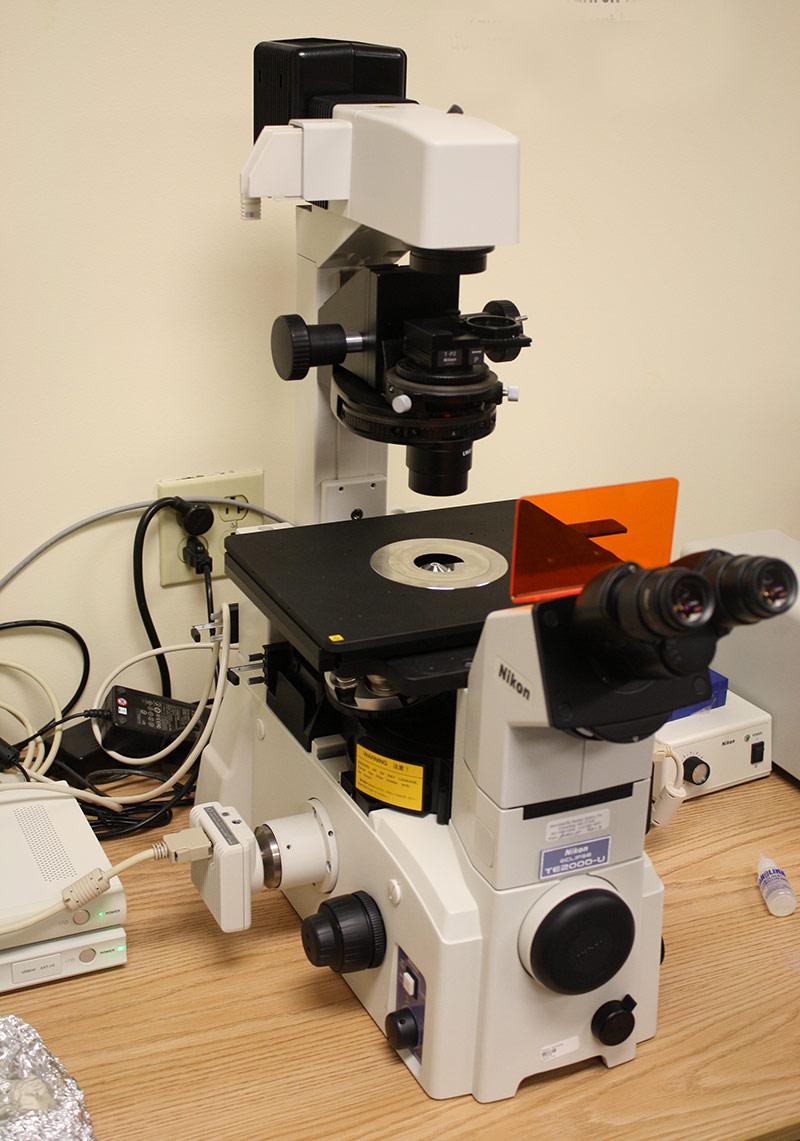
Inverted Fluorescent Microscope Nikon TE 2000U Inverted Fluorescent Microscope with Normarski D/C components and digital imaging capabilities.
Liquid Chromatography Mass Spectrometer (LC-MS) Used in microbiology, molecular biology, proteomics, and drug testing, liquid chromatography mass spectrometers can be used for microorganism detection, protein sequencing, analysis, and research. The LC part separates the sample into its components, which are ionized and sent through the mass spectrometer for identification.

Spectrophotometers The spectrophotometer is an instrument that can be adjusted to illuminate a sample with a specific wavelength of light. The spectrophotometer then measures the amount of light energy that is absorbed or transmitted by the sample.
The Hach DR 5000 UV-Vis Laboratory Spectrophotometer offers a broad range of water analysis methods with more than 240 pre-programmed tests.
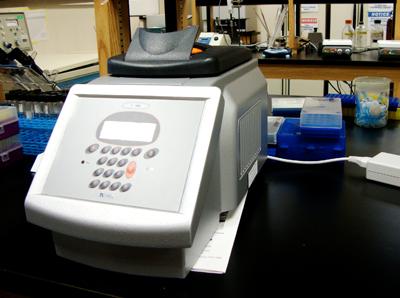
Thermal Cycler The thermal cycler is a laboratory apparatus most commonly used to amplify segments of DNA via the polymerase chain reaction.
Center for Natural and Health Sciences
The Center for Natural and Health Sciences contains various science laboratories, including a Microbiology and Molecular/Cellular Biology lab, an Organic Chemistry lab, an Anatomy and Physiology lab, a Physics lab, a Biotechnology research lab, and an Environmental wet laboratory, along with a greenhouse, computer labs, and various classrooms.
Classrooms for our Math and Computer Science, Science, and Public Administration programs are in this building. The 100-seat Comerford Theatre, one of two large lecture halls on campus, is located here.
McGowan Center for Graduate and Professional Studies
The McGowan Center for Graduate and Professional Studies, located on the corner of University and North Washington Avenues, contains classrooms and related clinical/professional space for Communication Sciences and Disorders, Psychology and Counseling, Education, and Business students. The Marywood Market is also located here.
The McGowan Center is home to the School of Education and the School of Business and Global Innovation. The Counseling/Student Development Center is also located here.
The building has modern classrooms, computer labs, and controlled lab settings for the Psychology and Communication Sciences and Disorders programs. Students from the School of Education may utilize the Curriculum Lab, which houses hundreds of school textbooks, teacher manuals, and other teaching materials.
Market Marywood is a convenience store located on the first floor of the McGowan Center. It features favorite beverages, snacks, Ben and Jerry's ice cream, on-the-go sandwiches, fruit, and salads.
Scholarships
Morris K. Udall Scholarship
The Udall Foundation seeks future leaders across a wide spectrum of environmental fields, including policy, engineering, science, education, urban planning and renewal, business, health, justice, and economics. The Foundation also seeks future Native American and Alaska Native leaders in public and community health care, tribal government, and public policy affecting Native American communities, including land and resource management, economic development, and education.
Faculty
Dr. Lisa Antoniacci
Department Chair | Associate Professor
Dr. Dhanapati Adhikari
Professor
Patrick James Barney
Lecturer | Lecturer
Marie R Betti
Lecturer
Dr. Derrick E Boucher
Assistant Professor
Brian G Bradish
Lecturer
Cloe B Capalongo
Lecturer
Matthew J Duffy
Lecturer
Christine S Fleming
Lecturer
Conor Flynn
Instructor
Dr. Deanne Dulik Garver
Professor Emeritus | Lecturer
Dr. Michael J Gottstein
Asst Golf Coach | Assistant Professor
Joseph J Granko
Chemical Hygiene Officer | Science Lab Manager
Kimberly Stanek Hague
Assistant Professor
Lawrence Eugene Hahn
Lecturer
Kathryn R Haines
Lecturer
Dr. Michael C Kiel
Professor
Brittany E Legath
Lecturer
Catherine A Malenovitch
Lecturer
Sara A Melick
Assistant Professor of Practice
Jenna L Milheim
Instructor of Practice
John Barry Minora
Lecturer
Rosann M Moskel
Lecturer
Dr. Brian J Piatak
Assistant Professor of Practice
Anthony Michael Pusateri
Lecturer
Joseph Snedeker
Lecturer
Thomas Snyder
Lecturer
Krista F Wargo
Assistant Professor of Practice
Donald W White
Lecturer
Courses & Curriculum (120 Total Credits)
|
Course Numbers
|
Course Names
|
Credit Hours
|
|---|---|---|
|
CORE REQUIRED COURSES
|
|
34 total credits
|
|
ENGL 160
|
Composition/Rhetoric
|
3
|
|
ENGL 3xx
|
Literature
|
3
|
|
PHIL 120 OR PHIL 121
|
|
3
|
|
Fine Arts Elective
|
|
3
|
|
OS
|
Oral/speaking
|
3
|
|
RST 112
|
Encountering Faith
|
3
|
|
WI
|
Writing Intensive
|
3
|
|
LANG 150/250
|
|
3
|
|
Elective
|
|
3
|
|
History XXX
|
|
3
|
|
PHIL 2XX OR RST 2XX
|
|
3
|
|
STEM 101
|
FYE
|
1
|
|
DEI
|
|
3
|
|
Information Literacy
|
|
3
|
|
REQUIRED MAJOR COURSES
|
|
56 total credits
|
|
BIOL 122 + L
|
Anatomy & Physiology
|
4
|
|
BIOL 150 + L
|
General Biology I
|
4
|
|
BIOL 151 + L
|
General Biology II
|
4
|
|
BIOL 235 + L
|
General Microbiology
|
4
|
|
BIOL 497D
|
Human Evolution
|
3
|
|
BIOL 410
|
Science Literacy Capstone
|
2
|
|
BIOL 411B
|
Curriculum Methods & Materials
|
4
|
|
BIOL 440 + L
|
Molecular and Cellular Biology
|
4
|
|
OR
|
|
|
|
BIOL 446 + L
|
Genetics
|
4
|
|
CHEM 131 + L
|
General Chemistry I
|
4
|
|
CHEM 132 + L
|
General Chemistry II
|
4
|
|
CHEM 221 + L
|
Organic Chemistry I
|
4
|
|
ENVS 420 + L
|
Ecology
|
4
|
|
**MATH 155
|
Statistics
|
3
|
|
***MATH 170
|
Applications of Calculus to the Life Sciences
|
3
|
|
OR
|
|
|
|
***MATH 211
|
Calculus
|
4
|
|
PHYS 303 + L
|
General Physics
|
4
|
|
STEM 102
|
FYE
|
1
|
|
EDUCATION REQUIREMENTS
|
|
40 total credits
|
|
EDYC 000
|
Field Experience (On Going)
|
0
|
|
EDUC 005D
|
Practicum IV Secondary/K-12
|
1
|
|
EDUC 102
|
Digital Technology and Communication in Education
|
3
|
|
EDUC 311
|
Educational Psychology
|
3
|
|
EDUC 411A
|
Effective Instruction in Secondary Ed & K-12 Ed
|
3
|
|
EDUC 414
|
Social Foundations of Education
|
3
|
|
EDUC 461
|
Methods, Materials and Assessment for Teaching ELS
|
3
|
|
EDUC 498B
|
Special Topics in Student Teaching
|
3
|
|
SPED 100
|
Characteristics of Students with mild Disabilities
|
3
|
|
SPED 300*
|
Curriculum Adaptations
|
3
|
|
SPED 367*
|
Behavior and Classroom Management
|
3
|
|
PSYC 251 OR PSYC 252
|
Developmental Psychology Adolescent Psychology
|
3 3
|
Math Placement Test: all students must take this test unless they have AP or dual enrollment credits which meet all
required courses for the major.
must take MATH 095 before any other math course (credits do not count towards graduation)
eligible for MATH 155, MATH 160 (pre-requisite course for MATH 211)
eligible for all math courses including MATH 211 (Calculus I)
*you may need to take MATH 095 prior to taking MATH 155 requirement depending on Math Placement Test
** you may need to take MATH 095, MATH 160 prior to MATH 170 requirement depending on Math Placement Test
F: fall semester; S: spring semester; SI: summer I semester; SII; summer II semester; F/S: fall or spring semester
Program Learning Outcomes
The B.S. Biotechnology program aims to prepare students for a career in the broad field of biotechnology. As biotechnology encompasses molecular research, genomics, DNA forensics, bioinformatics (biocomputing), chemistry, and environmental bioremediation, as well as administration, management, patent law, and other “business” areas, graduates will be positioned to compete for a wide range of positions. Moreover, graduates will receive the foundation for application to and success in graduate, professional (e.g. Medical, Veterinary), law, or business schools.
Student Resources
From #DayOne, Marywood is here for you each step of the way.